Contact Me Here
  Amanda M. Lyons - Author and Editor
  • Home
  • Shades of Midnight
  • Other Books
  • Blog
  • Editing Services

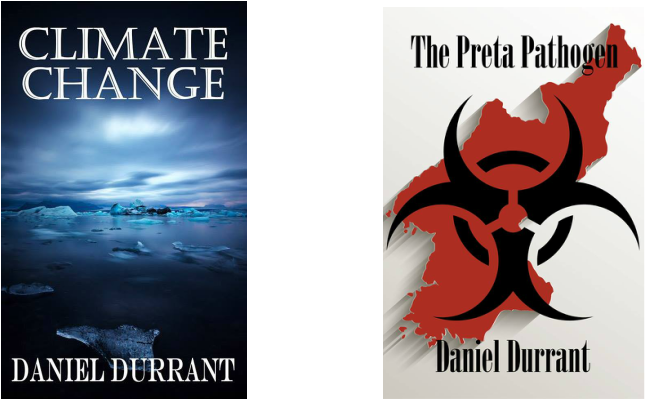
Interview with Daniel Durrant Author of Climate Change and Preta Pathogen Coming Soon!

8/3/2014

0 Comments

 
Picture

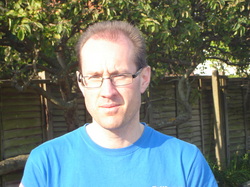
Bio: 
Daniel Durrant is a new author writing mainly in the horror and science fiction genres. His short stories have been published in several anthologies in the UK and USA. Daniel lives on the Norfolk coast in England, where he enjoys reading, dog walking, and planning the apocalypse. This is his first novel.The  Steampunk novella “Climate Change” has also recently gone into print.


Links: 


Facebook: http://www.facebook.com/danieldurrant.theauthor

Twitter: http://twitter.com/DanielDurrant6


1. Where did the idea for the story come from?


There are so many influences it would be tough to list them here! After some success with short stories and a novella, I knew I wanted to write a novel, but had no idea what the subject should be. Around that time I was reading some great zombie fiction, and realised I’d love to try that. Since the genre looked pretty busy, I wanted to write something that would (hopefully) stand out. With that in mind, I gave myself two rules. First, I would try fresh ideas and settings that would break away from the norm. Second, I would work hard to make the concept as realistic as possible. Every aspect of the novel, from the structure to the plot and the virus itself, stems from those two rules.  

2. What made me chose North Korea – was the research hard?

The setting was actually one of the first things I decided on. Since no viruses in nature possess the characteristics I required, the “Preta” virus had to be an engineered creation. So the question became: who would have the means and motive to be conducting such dangerous research? I was pondering that when North Korea hit the news for conducting missile tests. It seemed perfect.

I found the research fascinating, so much so that I got distracted by it. As ever, Wikipedia was an important resource. Beyond that, military and international security websites were invaluable. Some of the best information came from sites detailing human rights atrocities – sadly, some aspects of the story are close to factual. I ended up reading far more than I needed to, but hopefully I have done the setting justice.


3. Why is it called the Preta Pathogen – what makes it different from other viruses?

“Preta” is the most common name for the “hungry ghost” of Asian folklore. Traditionally, Eastern religions assert that after death, the spirit of a greedy or selfish person is condemned to wander the Earth, forever hungry. In some versions, the ghost craves human flesh. It seemed a good fit - superstitious North Koreans might blame zombie-style attacks on the supernatural. So the folklore named both my creatures and the virus – which of course, gives the novel it’s title.

The nature of the “Preta” virus itself lies right at the heart of the novel. Whilst the virus does spread via bites, it is not your classic zombie pathogen. Those infected can survive for some time before succumbing to the effects. Even worse, the virus can spread via other means, meaning asymptomatic carriers are constantly spreading the infection (I won’t spoil the plot by revealing how). In the world of the “Preta Pathogen” checking your fellow survivors for bites is not enough – they might be carriers anyway.


4. Two – sides – why write about Ji Tae and Ben?

Strangely, it wasn’t the original plan – Ji Tae’s point of view was meant to last only until the two main arcs of the story converged.  However, once Ji Tae was established, I felt she was too strong a character to side-line. You would expect someone that has lived under a military dictatorship to have a very different view of the world; perhaps even a different sense of right and wrong. I found the contrasting perspectives of Ben and Ji Tae a useful way to explore certain ideas. The setting is an important part of the novel, and I found that was best illustrated from Ji Tae’s point of view. Also, there is room for Ji Tae to be a bit of an anti-hero; she has done some very bad things. That made her particularly enjoyable to write.

5. Was it difficult to match up the intrigue, setting etc?

I’d aimed to make the novel more expansive than is perhaps normal in the genre, so having chosen an interesting setting, it seemed rather wasteful not to make use of it. I felt the paranoid nature of the North Korean state made for a marvellous backdrop. So whilst the novel is certainly horror, it’s told in more of a thriller style, and incorporates a story line that reflects the real tensions on the Korean peninsula. As an extension of that, I wanted to anchor the story in the real world, which is illustrated via the regular BBC World News excerpts. That element also created a contrast I really liked - the main characters know exactly what is happening locally, but remain unaware of the greater effects. Conversely, the outside world is seeing all of the effects, but is completely unaware of the cause.

6. What makes it different?

If I’ve done my job properly, “The Preta Pathogen” should feel different from the genre norm for several reasons, but I would say realism is the most important one. All the way through the research and writing, my mantra was, “is this credible?” Although my virus is (thankfully) fictional, the key elements are grounded in real science. Likewise, I wanted there to be a solid reason for everything that happens – a key aim was that the events of the novel should feel like something you might see unfolding on the news. Before writing “The Preta Pathogen” I read (and loved) many zombie novels, but often wondered why most shied away from really explaining the virus, or detailing precisely how it has spread across the globe. Having now done so, I know why - it is extremely hard to write a believable scenario! But I got immense satisfaction from the process, and I hope readers will really enjoy that aspect.

7.  Could it really happen?

Sorry to disappoint any zombie preppers out there, but no, it couldn’t. I did a huge amount of research on the medical / genetic / viral aspects of the novel in order to ma As a result, I’m confident that I’ve pushed a zombie-esque virus closer to plausibility than ever, but no, it still requires a considerable amount of scientific and mathematical “adjustment” in order to work. I would say let’s be happy to suspend disbelief and enjoy it for what I hope it is: a good story. On the other hand, any good zombie story should make you want to keep a blunt instrument handy; it’s part of the appeal. So if a reader feels compelled to stock up on MRE’s and .223 NATO rounds, that’s up to them.

8. What’s in the works?

I am currently writing the sequel, which picks up the story a few months after the events of “The Preta Pathogen” (although the novel can be read on a standalone basis, it was always intended as the first part of a trilogy). In the sequel, “Preta” outbreaks have hit several countries, and governments across the globe are struggling to contain the virus. Even worse, Ben and his fellow survivors find that not everyone wants to stop it.
Picture
0 Comments

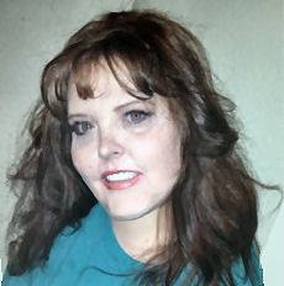
Interview with Catt Dahman Author of the Virgil McClendon series and CEO of JEA

7/8/2014

0 Comments

 
Picture


Bio
: Catt Dahman has been writing for more than 30 years, has taught in public schools, private schools, home school, and college. Her B.S. and M.S. degrees are from Texas A & M. Her areas of study were: Criminal psychology, art, and English. She is a native of North East Texas, has lived all over the US, (and tries to claim Jamaica as a second home) but is currently back in the Fort Worth, Texas area where she lives with her husband, David (a retired Marine), son Nic, cats, a ferret, and dog. She has also been a public speaker, artist, director for a charity, dabbled as a PI, and more. When not working, she enjoys SCUBA diving (PADI), reading, ruining movies for her family by pointing out mistakes, collecting Tarot card sets , playing Legos with her son, and growing herbs. She now writes full time, has zombie series of nine books, short stories, and several books of horror. She is available by e-reader and paperback.


Links: 

Website: http://www.cattd.com/
J Ellington Ashton: http://www.jellingtonashton.com/
Facebook: https://www.facebook.com/CattDahman
Twitter: https://twitter.com/cattdahman
Wikipedia: http://zisforzombie.wikia.com/wiki/Z_is_for_Zombie_Wiki
Smashwords: http://www.smashwords.com/profile/view/cattdahman
Amazon: http://www.amazon.com/-/e/B007N5843K
Blog: http://www.cattd.com/catts-blog


1.You’re writing a great serial murderer series about a character named Virgil McLendon, could you tell us a little about the character and what he’s facing in your books?

The Virgil McLendon books have grown. I think they are stand alone books, but Virgil began as a small town deputy (book 1) and was teased a little because of his “weird” ways at looking at crimes. He still solved the crime, because of his quirks and not despite. He thinks of music and logic when he sees a case, and he notices things that don't fit and asks why. And he doesn't know it, because it is way back in the 1970s before law enforcement accepted new techniques, but he uses basic psychology. He listens to people and watches them. He looks for what is out of place and asks why. He never forms a theory but lets the facts stand alone. Because he is so unusual, he goes from deputy, to sheriff, to special agent in the FBI and to then one of the founders of the BAU division, and still doesn't understand why others can't see things just as clearly as he does. My favorite part is when a sheriff asks Virgil if it isn't a little unthinkable to have two serial killers acting in one town at the same time. Virgil is flummoxed. He can't imagine why there wouldn't be! Anyway, he is facing the changes of a country and in crime....

As the series go, we know the characters and sometimes some issues are not resolved. Virgil's entire family is in law enforcement and there are a few family secrets, so besides the legal work, Virgil has a beautiful wife who wants a family and career, friends  who are sometimes in danger, and his own fears of failure.


2. These are based on real serial killer cases, was it difficult doing the research? Was it hard reading into some of the more brutal crimes?

It should be, but I guess I have become  calloused to the cruelty. That said, one case I can't read about is the Adam Walsh murder, that is the one that gets to me, mainly because there is nothing worse than a killer that brags brutal details- it makes me physically ill. I read a lot, I began in criminal investigation, and even did some work as a private investigator, so I think I've seen a lot and learned to turn off the emotion for most cases. That said, I do have issue with the cases never solved or those that are so confusing that I have to pull court records and sift through before I understand them. One such case occurred close to where I live and for years I was torn on whether the person was guilty. I finally wrote about it and let “Virgil” look at it.  I came to a partial conclusion, but not one I feel at peace with. Those cases..the ones where there is doubt...those bother me.

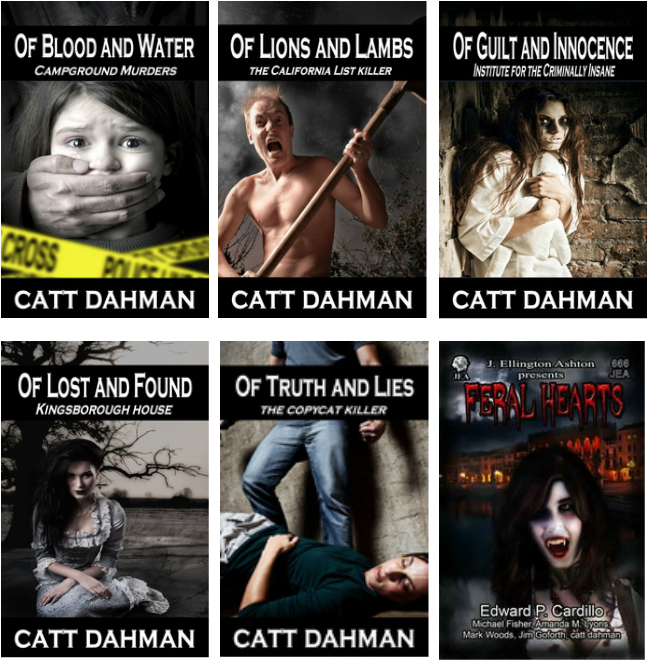
3. Of Blood and Water starts the series and right away you’re tackling some seriously brutal stuff, child murders during the 1970s. Was it difficult to cover that territory or did you feel the subject matter made the book that much more compelling?

That case hurt. After research and writing, I feel the wrong man died for the crime, a guilty man walked free, and I reflected that somewhat in the book. That was supposedly one of the first times that profiling was used, but it was- in my opinion- used without sound experience. It was more that I was using it to fit a scene than allowing the scene to dictate the parameters. It was hard to describe the deaths of the children, and I did try to stay with most facts, but I have done the same for the entire series and it never gets easier. The California Killer was horribly brutal and there was a man who fed victims to alligators...so they are all rough.  I read and research the real cases before twisting them and making them a little more difficult to solve . I do feel the reality makes me stay more honest to the real evil that resides in the killers. While some cases are never really resolved (as opposed to solved), in my books, the killers generally meet a bad end. My good guys win. Mostly. There are a few who will be taken care of in later books...it was just not time to let them be punished yet.

4. Criminal profiling was very new during the era McLendon is utilizing it, was it interesting researching how it worked when it was first used? Is it much different than it is today?


People treat Virgil as if he uses magic. People think it's crazy, that he can tell so much from a crime scene and profile a killer because it just wasn't done back then. Virgil uses more of what we use today...he's way ahead of his time. But people are shocked at his logic. I get a kick out of having Virgil smarter than the others. Because of the changes in the 70s, we saw new things. Back then, it never dawned on us that a killer might be a female or a normal person. We still thought  it had to be a crazed killer or the drifter or the black man. Virgil is aware that it is never the outside element and that mostly, it is someone very much like the victims as far as race and experiences. I have enjoyed allowing the first female and African American FBI agents to work with Virgil and hope that shows the changes of the country and changes in thinking.

5. Book two Of Lions and Lambs focuses on a male serial killer attacking young men and mutilating them, Of Guilt and Innocence takes place at an institute for the criminally insane, Of Lost and Found takes place at a huge house known for disappearances and book five Of Truth and Lies is about a killer who helps McLendon solve a copycat killer’s case. This is a series that covers a lot of ground! Was it hard coming up with great cases to base McLendon’s cases on?

Unfortunately, there are many brutal crimes available to take from. Of Guilt and Innocence is probably the one that doesn't fit because it is almost fully made up and not based on a crime per se. (The people incarcerated there have committed crimes we may be aware of or have heard in urban myths) but it's really about secrets related to Abraham Lincoln and the research I did is solid, but it's almost over the top as far as believability. Yet, the facts are pretty strong to support my “case”.  The stories keep coming because there are so many mysteries out there and I get to combine them with my murder cases. The famed Winchester House appears, but I was able to reinvent it as something far worse. I guess real cases give me a seed, but I take the stories in new ways and tangle them so nothing is ever easy or how it seems.  I wouldn't even say the books are about what they look to be. The first is about family traditions (bad ones). I love to tackle that topic and have done so in several books. The second is is more about people being seen as female, black, gay, whatever...as individuals in a changing world. I have dealt with forced religion and it taking ominous meanings, and more. I think I take social situations...injustices or changes...and show this with mysteries. In a new book, I am delving into rape and blaming the victim instead of the offender, but it looks like a simple murder mystery. I don't think I will ever run out of wrongness to write about. (oh...I have a new tag line???)

6. You’re known for taking risks with your writing and enjoying unusual subject matter, tell us a few of your more interesting stories/books and why you like to seek out the unique.

I probably take far too many risks. I don't set out to, and generally have an idea like...”what if some girls took revenge and then”....and from there it gets weird because I find connections and I let the characters control the action and there is always far worse than what we think. To me, there may be a fin at the surface, but I know that down deep, there will be a school of hungry sharks and probably someone who likes the bloodshed and a horrible back story. But isn't that normal? If we see a lady with a black eye, did she really run into a door? Or is there a terrible story there? I think I am all about the secrets and hidden stories because they are truth. I am one of those truth-seekers. No matter how bad it will be, I like to know. And as Virgil would say, why wouldn't there be all kinds of scary things going on behind the normal? We all once were innocents, but we lost that...maybe with Vietnam.

7. You also took part in a collaborative book called Feral Hearts due out from your publishing house J Ellington Ashton very soon, did you enjoy the project? Is it tougher to work with a mixed group of writers than it is to work alone?

I loved the story and the process. I loved working with such a talented crew that challenged me. But, that said, it was hard and I would have failed if not for Edward Cardillo. I tend to write myself into corners and blaze my way out; that wasn't workable for this project. Ed saved my bacon and made my work far more reader friendly. It's a great book and very, very unusual with the writers having to work off a single premise, but the other writers were far better at this than I was. In my defense, I am not a short-story writer ( a handful at most) and I am character heavy, so it killed me to have random characters that might do things I didn't expect! I have tons of respect and admiration for the rest who did so well. On the other hand, I am thrilled that Ed and I could collaborate (a nice word for his work to save my butt). And by far, it was harder to write with others; I don't play well in a group. I think I do better when I am sent to the corner alone so I don't bother others. :)

8. Tell us a little about Feral Hearts and what we can expect from your collaboration. What was your favorite part of working on it? Were there any major elements you really liked about it?

Going into FH, I was the weak link because I don't write short stories, don't delve into vampires, and  had never collaborated. Even with that, my fellow authors are so strong that they covered my weaknesses and ran with the character I created. Designing “Jenna” -the OCD saturated nut of the bunch- was more than fun. I had a ball with her, adding little hints and secrets here and there, and giving her a life of her own. I feel like she stands as a strong character and frankly, that's all I do -develop characters and let them run amok. I like how others embraced my little monster, but that shows professionalism in their work. Again, I claim weakness, but the rest and editor Ed Cardillo are what makes FH a strong book. The voices are distinct and the action is solid. I think readers will get a favorite book out of this because of the diversity. They will at least get a shock!

9. Lycanthroship is currently in progress and utilizes some of the same authors as Feral Hearts, could you tell us a little about the premise? What makes the book unique from it’s siblings FH and Fish Tales?

It's (Lycanthroship) a looser type book...as far as the set up....I threw  out a set up and said , “RUN!”. That works for me. FH was more controlled.  One type isn't the better of the two...we get very different results with these and they can't be compared. I think FH with vampires, has some expected rules and twists, but with werewolves like in Lycanthroship, we get turmoil and confusions. Werewolves are just such messy beasts! What is interesting is that the authors don't replicate characters; they go in very different ways than in FH. Again, it shows that the authors are solid writers and not only think outside the box, but see no box at all! Fish Tales is a collection of frightening stories that are related ONLY by water. Lycanthroship and FH are stories set within a defined universe, a time and place in common and the characters interact.

10. As the CEO of JEA you have to make a lot of tough decisions about which authors to pick up. What are the biggest things you look for in an ideal author?

Sometimes, I can “smell” when a book is right. Sometimes, I don't know, but have a feeling. I know for a fact we have passed on several books that were fantastic and if I were to go back in time, I'd grab them. At the time, maybe a word threw me or we had something similar, or I was distracted by something else. I make mistakes. I never know how we decide something isn't right, except that we get a lot of subs and can only take a few. I have taken a few as favors, I admit that. I have taken some before because the pitch and the credentials were amazing. I'm impressed when a sub meets the exact requirements we ask for! 

I took Keith Milstead as an unfinished sub, (that's unheard of) but his voice shocked me. I did ask for a few changes, but the story was rock solid. It's worth waiting for. Andy Bove was an author I asked to sub to us because his pose was virtually perfect. Sometimes I speak to an author and feel a connection and see their wit (Tabitha Baumander).

 There is no ideal author. We have missed a few, but the most ideal ones I know are those with us. They are amazing. Those who want to be with us and who are....those are ideal because they believe. Mark Woods may be the most ideal. He was shy and quiet about his writing, took the swift kick in the rear I gave him, and came out selling like a monster! Anyone can say he is a great writer, but I take notice when I see that someone is and yet that person is humble. Still water runs deep...always has. I see authors boast about sales and waving hands and jumping around, and they generally don't impress me. I think the strongest writers are the ones who let their work say it all.


Picture
0 Comments

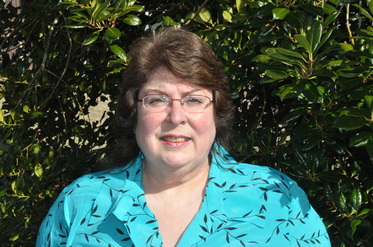
Interview with Sharon L. Higa

4/28/2014

0 Comments

 
Picture

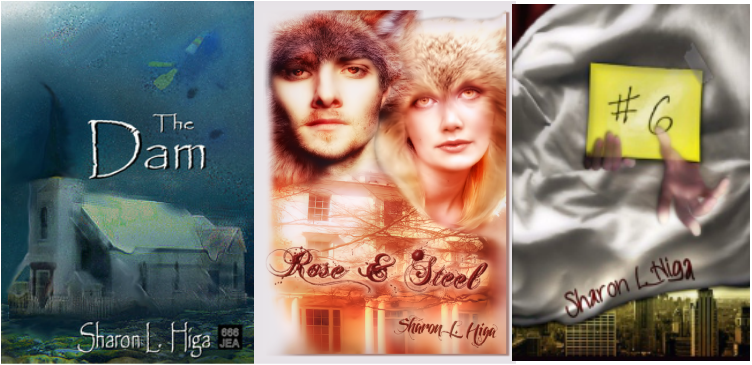
Bio: At six years old, Sharon L. Higa became obsessed with the supernatural, compliments of an older cousin who fascinated her with stories of hauntings and horror.  Travelling the world with her family, the fascination grew, resulting in creating and telling her own stories. She wrote intermittently for a number of years, but it was after she and her husband moved to East Tennessee that her family and friends convinced her to write and publish her works. She is a newly published author with one novella, ‘The Dam’ and two novels, ‘Number 6’ and ‘Rose & Steel’., as well as four short stories in the Anthology ‘Midnight Remains’,  all published by JEA Press. She also has one short story in an anthology, ‘Mental Ward: Echoes of the Past’ with Sirens Call Publications – with many more stories bubbling on the mental burners.  She now writes full time. She resides with ten cats, one dog and Mark, her patient and loving husband of twenty two years.


Links: 

Website: http://www.leapingunicornliterary.com/
JEA: http://www.jellingtonashton.com/sharon-higa.html
Goodreads: https://www.goodreads.com/author/show/7303130.Sharon_L_Higa
Twitter: https://twitter.com/elf126


1) Your Debut novel #6 is a murder mystery and revenge tale revolving around a woman who is murdered. Can you tell us a bit about the book and why you wrote it?


I wrote #6 after hearing about an actual murder which occured over thirty years ago when I was living in California. A nurse was kidnapped by two men who then drove her out to the Los Angeles National Forest, took turns raping her then slit her throat. The girl' body wasn't found for one year, but it actually was another year later before the men were caught committing a totally different crime. The younger of the two men confessed to her killing, implicating his partner as well. He said the reason he was confessing was because 1he kept seeing her everywhere he looked and he couldn't handle it anymore. The lawyers, police and media put it down to a guilty conscience, but there was always the thought in the back of my mind that she could have been truly haunting him. And that's how the idea for #6 was born.


 2) It’s been called a brutal tale because of some of the darker elements related to both Ida Moreno’s (the main character) death and the crimes she is involved with trying to solve to catch the killer. Do you agree or is it just what the tale needs to be? 


The tale is brutal because the crime committed against Ida is brutal. This is what the tale needs in order to carry out the dark theme throughout the story. I don't like gore or sadism for 'window dressing' - I believe it needs to apply to the story and carry the plot otherwise it has no place being in there. Then you are simply relying on shock to carry the reader to the end and that does not always work.


 3) Do you often write dark horror fiction or is it one of a few different genres you like to work in?


I like to work with horror, thrillers, mysteries, dark comedy, and fantasy/action. I'm definitely not a girly-girl - give me a good action, adventure or ultimate horror and I'm as happy as a clam! To quote from the horror specialist Stephen King, "Write what you know" is my guide - and I guess I know through life experiences these genres very well!


 4) Rose and Steel is your newest book and features an investigative agency that utilizes supernatural powers to solve their cases. Do they all share the same powers or are there a few different types in the company?


Each one of my characters all share the ability to transform into wolves, but they also have talents of their own as well. Shane, our main character, can read minds as well as send messages telepathically; Travis, our youngest and most timid of the group has the ability to become invisible and is very adept at medical aid which is discovered in book two (yes, I have a second book prepped!) and the others have special gifts as well. The key to the story is that they can combine each one of these gifts and help solve every case they are given.


 5) The main story revolves around a series of crimes that leave children abandoned without any clear cause and human traffickers that are taking children. Was it a difficult subject for you to tackle? 


That was the interesting thing about this story. It basically wrote itself. The 'children' who are abandoned (my 6 gifted characters) is explained using another fact of history - that many times children who were considered by some societies to be mentally deficient/insane or adults too old or sick to benefit the society would be abandoned in desolate areas to basically die. This story gives the fact a little twist which inevitably encompasses the major case they end up working on.


 6) What other projects do you have in progress or due to come out soon? Tell us a little bit about them.


I have my own anthology of 13 short stories coming out soon. The title is "Horrors & Occupational Hazards" and - as you can guess from the title - each little story revolves around a regular job that has a 'twist'. The style, my wonderful editor, Mark Woods says, is very 'Alfred Hitchcock Presents'. I am also collaborating on a novella whose title is 'Z-REGEN (Zombie Regeneration Project)' which is not really your typical zombie story. It is about a CDC researcher who is looking for a cure to the 'Zombiefication Plague' which has hit the planet in the year 2031. I'm also working on a dark comedy novel called 'One Night in the Eternity Of......' -about an Asian vampire with narcolepsy. Not to mention the little shorties I'm coming up with on the side. I guess my plate is pretty full at this time! I would truly be lying if I didn't say I'm lovin' every minute of it!

Picture
0 Comments

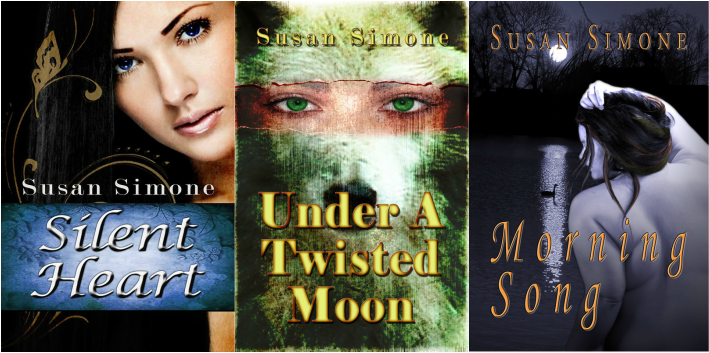
Interview With Susan Simone Author of Morning Song

4/25/2014

0 Comments

 
Picture
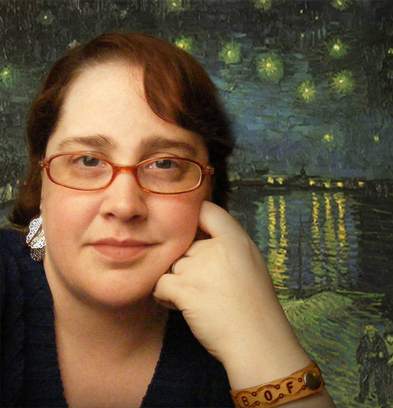
Bio: Susan is a writer and artist by day, a child and pet wrangler by night, and occasional crazy person on the weekends. She lives in a place where new hybrid cars, beat up farm trucks, and Amish horse and buggies meet in fast food parking lots for coffee.

Susan grew up in central Wisconsin, only to move to rural Ohio in adulthood. She's a country girl through and through with progressive and optimistic ideas of nation and society. A heathen by faith and major sci-fi fan she is an eclectic person and welcomes as much diversity into her life as she can to feed her fertile imagination. She lives by the motto, "Let your freak flag fly!"

Susan is the author of "Silent Heart", "Under A Twisted Moon", "Morning Song", and other titles forthcoming. Susan also has her one and only zombie short in the JEA anthology "All That Remains".   In addition she has published articles on the Yahoo! Contributor Network in a wide variety of subjects such as the validity of deity in the American government and the use of easy to find herbs.

Susan is the Executive Editor with J. Ellington Ashton Press as well as a graphic design student at The Art Institute of Pittsburgh Online Division.  She does a large portion of the cover art with JEA and has worked with businesses in the past for logo creation and event announcements.


Links: 


Website: http://susansimone.weebly.com/
Yahoo Contributor Network: http://contributor.yahoo.com/user/1652160/susan_simone.html
Goodreads: https://www.goodreads.com/author/show/6941373.Susan_Simone
Facebook: https://www.facebook.com/SusanSimoneFanPage
Publisher: http://www.jellingtonashton.com/index.html


Picture

1)    Morning Song is a great story about a wise woman and hedge witch facing her fears and owning her strengths to find that life has a great deal in store for her and the strange man she meets near the beginning of the book. What inspired Morning Song? 


It started with a name.  I know that sounds odd.  I wanted to write a BBW heroine and started thinking about how that would work.  There was this idea of calling her Morning.  It was almost surreal.  With that one thought I could see her in my head so clearly.  I was actually the biggest snob picking a model for the cover because I knew what Morna (Morning) looked like to me.  I started with the opening scene and that was the last part of that book I wrote consciously.  The rest just poured out.  It was as if Morna and Arrick existed in another realm or dimension and they were simply telling me their tale. 

Yes, writers really are that insane.  We have to explain all those extra voices somehow.

2)    Was it difficult writing a post-apocalyptic fantasy romance and handling the midwifery and herbal magic Morna uses in the book?

Post apocalyptic was harder because I’m not used to it.  I had to think how the country would be broken up.  What parts were important?  I had this very clear idea of music.  As a singer myself, I’ve picked up all kinds of folk music, madrigals, classics, contemporary.  I played with this idea of what music would stand the test of time and turn into folk songs over the years.  The music I chose was not a prediction, but more of a secondary idea of getting people to listen to the music and understand how it enhanced the scene.

Midwifery and herbals were much easier.  They are subjects I have a fascination with.  I do have some midwife skills, but I am not currently licensed because of the direct entry laws.  The state I live in won’t let me apprentice under a midwife, I have to have an RN to practice which is another eight years of school.  However, I still love it and I’m one of those very annoying people who hand out random unasked for advice when around pregnant women. Lol

I do the same with Herbs. “Oh you’re sick?  Try this, this, this and this, but watch out for that, and only use this at this time of day.” That is only an amateur study for me, though.  I ascribe to the American Indian belief that everything we need to live happy, healthy lives, and dispel illness grows somewhere on the planet.  With doctors and scientists help we need to use it.


3)    Under a Twisted Moon also deals with a heroine discovering herself and growing stronger for it. In this case she learns the part of herself she hid was really her strength. Do you feel that many women find themselves in a position where other people cause them to fear their strengths?

That’s a deep question.  I think any *person* of any gender or orientation who finds themselves in an abusive situation, regardless of the abuser or type of abuse, is there *because* their fears have been berated and their strengths twisted to weaknesses.

Some of Amelie’s experiences with Rick were based on things I lived through.  I kept that under wraps for a long time, and even came up with politically correct answers to the inevitable questions.  In a way, watching Amelie survive and thrive opened the door to a lot of conversations we need to have as a culture.  Yes, we all know abuse is bad.  We all know abuse comes in many forms and can sneak up on you, but until you’ve lived it, it’s very hard to understand how you got there. 

The worst thing I hear is, “Why does she/he stay?”  I want to shake people when I hear it.  Fear.  Fear of the abuser’s reactions.  Fear that all the things they told you to keep you down were really true.  A very real fear of society taking over the abuse and victimizing you when you just want to live in peace.  Fear of being alone because you’ve been beaten down so hard you won’t ever have a normal relationship with anyone ever again, like an abused animal is never normal again. 

“Why does he/she put up with it?”  Because it’s not clear.  Before you all scream at me, listen for a moment.  It sneaks up on you.  The line of the initial abuse is blurred.  You can’t see it clearly from the inside. It doesn’t start with violence.  It starts with an unreasonable argument.  A personality disorder.  A little niggling in the back of your head that makes you wonder if they really were being that manipulative or if they were having a bad day.  Then there are more bad days.  A lost job, or a fight with a friend.  Oh of course they’re having a bad day.  They don’t mean it.  Pushing away your friends and family, slowly one by one.  Life is really hard right now.  He/she needs me.  The line is blurred and by the time you realize it’s been crossed you’re so far over you start to believe all the lies you’ve ever been told.  You worry about staying for the sake of kids, forgetting that by allowing it you’re teaching them that it’s normal or okay.  Eventually you find yourself alone; facing things that you know may end your life.


4)    You write about strong female characters that are grounded in the real world. Do you think this gives your book a leg up on books that feature women in more unrealistic or unhealthy fantasy relationships?

I think that was on accident.  I’m always interested in the psychology of it.  Why do people do what they do?  How do people get into these situations?  But that’s on behavior alone.  I do think it important to reflect women and men who are real, flawed.  I pick characters because their flaws are interesting to me.  I can’t stand the perfect blond bombshell types, or the overdone hardcore, but really sensitive and sweet deep down types.  Everyone is a jumble of all that.  No one is perfect, and society’s ideas of how genders should act or what they look like is nothing but a construct created thousands of years ago by a few that were insecure with their own image so they had to spout their way was the only right way. (That was *not* a religious diatribe, btw.)

5)     You write about some tough subjects in your books, how do you approach these? Catharsis or characterization?

Courage?  For me and many other writers, the characters are like living people with their own separate lives.  I don’t control them.  I’ve had several die or get into relationships completely without my approval.  I write the hard stuff instead of glossing over because I am honoring them and all the living people that have survived the same things.  It’s a disservice to cut it out or gloss over because it’s ugly or makes me cry.  In reality my characters may be fictional, but real people, myself included, live these things.  There are no tasteful cutaways, or suspenseful music.  The world did not stop moving just because your life as you knew it is forever changed.  If we are to grow as a society, *that’s* what needs to be known.  That’s what needs to be said.

6)    Under a Twisted Moon is a very strong empowerment piece about owning your strengths and coming out of a place where things had been very bleak. In a very real way while one of the male leads helps her to start out on her path to self-discovery it is she who must stand up and take up the reigns of her own life. Is this a message you hope will help others to do so for themselves?

Absolutely.  No one can walk your path.  It is entirely unique to you.  Sometimes you need a little love or a loving kick in the rear, but you still have to be the one to stand up and be counted. 

7)    While there are some very involving dramatic pieces there are also lots of humorous and endearing ones too. Was it difficult to write humor into Silent Heart, Under a Twisted Moon and Morning Song or does it come naturally to you and your stories?

I’m one of those dorks that laughs at her own jokes.  I’m even snickering as I write this.  The humor is very organic.  I’ve noticed my dialogue follows my moods.  The jokes, the tough conversations, the arguments reflect what I was feeling at that time.  Sometimes I’m slap happy and everything in the world is hilarious.  I’m also a horrible smart ass, and I think my own natural voice comes out a lot.  The things I really want to say but often just laugh to myself about, or the things I wish I said at the time.

8)    Silent Heart was your first book and you’re currently at work on a new cover for it(See the new cover for Silent Heart and Under a Twisted Moon below). Is it hard to go back and try to think of a new way to represent your books after they’ve been in print?

Sometimes, covers make me want to cry. Lol  When I did the original cover for Silent Heart, I was new to graphic design and still had a lot to learn.  It was not a good cover.  So right now I’m revamping a few covers, Silent Heart among them.

I had this perfect image in my head.  Red and golds.  This layout involving a band of color over top of a pivotal scene in the book in which Paige, a talented artist, takes back some of her power by doing this charcoal drawing on leather of her love.  I even managed to make the perfect model for Stone look like it was a charcoal drawing.  I was so proud of it.  Thought it was great, (I still love the hell out of that image).  I showed it off for feedback, which is very important for any work of art.  Survey said?  No.  It was a cool image, but just didn’t work.  It didn’t peak anyone’s interest to read the book.  Well fudge.

So I slept on it and tried something else the next day. That finally worked.  I grudgingly admit it’s a better cover.  It fits the genre, but stands out from the crowd, which is what you want.  That kind of redo and version after version is really normal for cover art.  Never settle for the first thing an artist shows you.  Push them and get something great
.

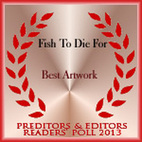
9)    You’ve been a cover artist and executive editor at JEA for a long while now. You’ve even trained a few interns and earned an award for the cover of A Fish to Die For in the 2013 Predators and Editors competition. Do you feel like you’ve learned a lot since you first started out?

Yes.  Each cover is learning something new.  Finding this tool I hadn’t used in quite that way before.  A new layout or idea.  It’s amazing to take a concept from an author’s mind and turn into a picture for all to see.  I love seeing how excited they get.  I even love the tough ones that make me go through 10 versions before it’s right.  The end result is always amazing.  Every once in a while, something will happen, a new thought from one of my classes, a certain request I’m unfamiliar with, and it’s like someone flipped a switch and my work is never the same after, always moving forward.

10) In recent months you’ve also branched out from providing covers for JEA to becoming a freelance cover artist for other writers. What kind of services do you offer and how can people reach you to ask about their projects?

The best way to contact me is through my website.  I have a contact form on the artwork page.  I offer original design and full rights to the author.  In other words I won’t get angry at you down the road and say you can’t use my art anymore.  I also do something new that I want to make industry standard.  I provide the client with documentation of where the images used on their cover came from.  There is so much image plagiarism out there it’s rather insane.  Covers on some sites are lawsuits waiting to happen.  I’ve personally had to replace covers done by so called “professional” artists because they used a video game screen shot or stole one small part, like a hand, from a major piece of art and blew it up, both of which are illegal. I want to put out such a high standard that it forces authors to demand it from others and other artists to adhere to it.

11) Will you stick to the romance genre or do you think there are some other genres you’d like to explore?

I never intend any specific genre.  I just write where the story takes me, following along in its wake attempting to capture the important parts.  I get an idea in my head and I run with it.  Sometimes that’s romance and sometimes not.  I’ll figure out the classification when I’m done.  I’m the same way with length.  I don’t believe in word lengths based on popular books in the genre.  I just write until the story is told.  Sometimes that’s longer, sometimes shorter.  If I need to flesh something out, I’ll worry about that later.

12) Do you have anything in progress you’d like share?

I have this one I call, Kiss of Luck.  It’s a dystopian society with alien mind control and young adults, still teens really, that want out and stage daring escapes.  I’m kind of careful with my ideas.  I know more than one person that has had ideas stolen.  Kiss of Luck, is a special one for me.  I dreamed it one night, start to finish, the entire plot line.  I’m just filling in details as I go, but it’s going to be really cool.


Picture
0 Comments

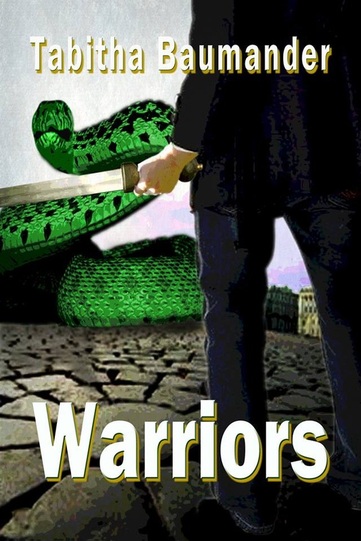
Interview with Tabitha Baumander Author of Warriors

4/13/2014

0 Comments

 
Picture

BIO


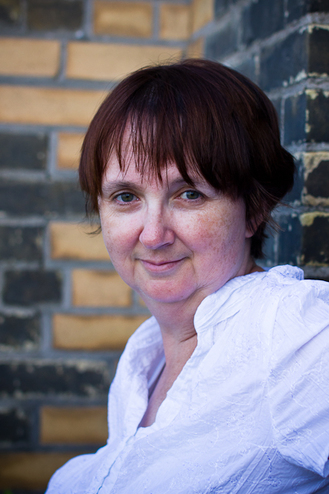
Tabitha Baumander is a novelist screenwriter and playwright with five books published and a lot more to come. She is divorced with adult twins and lives in Toronto Canada which she is currently populating with aliens, monsters and fairies. Well, why not.


Links:

Amazon: http://www.amazon.com/Tabitha-Baumander/e/B00F6GJCZ2

Facebook: https://www.facebook.com/TabithaBaumanderCanadianWriter

Twitter: https://twitter.com/Tovha

Website: http://tabithabaumander.yolasite.com/


1)      Warriors is about a group of very special warriors who must protect our world from inter-dimensional beasties, Where did the idea come from?

To begin with Pope John Paul had just died. I wondered, as a fantasy writer might, what the death of someone who is supposed to be a very good person would do and where I could take that. The inter-dimensional aspect comes from a desire to stay away from theology as much as possible and ground the villains in a kind of explainable context.

The origin of the warriors oddly enough actually does come from the bible. I’ve used it before in another work.

"There were Nephilim on the earth in those

          days; and also after that, when the sons

          of God came into the daughters of men, and

          they bare children to them, the same became

mighty men which were of old. Men of renown."


That’s from the King James bible genesis. Some people like to think its proof of alien incursion on earth. I started playing with the Nephilim simply because Hollywood was beating the end of the world 666 Antichrist plotline into the ground with a big stick.

These characters are sometimes called Watchers and were been used in a Hollywood movie a few years ago. It was called The Adjustment Bureau.                

2)      You clearly know action and humor, Warriors have it in spades. What are your favorite action scenes in the book?

I’m not very good at naming favorites of anything. I suppose the group of battles around the Vatican at the end is good. Then there’s the very big snake, can’t lose with a very big snake.

3)      Darius and Angela are our leaders, were they inspired by anyone? 

Darius is the leader Angela is a new member and not a leader. She does have a lot of input because that is the stuff she brings to the team. Visually I guess I based Darius on my son. Angela is completely fictional created because that is the sort of person I needed to fill that gap in the story.


4)  It's not all about the warriors, there's also a very strong story about a bishop and his assistant facing off with another bishop and his associate. Neither battle is any less important. How did you keep the pace so strong for both aspects of the plot?

     Someone once told me I was an “instinctual” writer. I don’t think they were intending to be complementary either but they were accurate. For me pacing is about feel. I move through the story and I tend to think “mmmm about time we checked in with this other bit now”.

     On a side note I have a papal conclave in this. It is total fiction in that I have stuff happening that would never happen in a conclave. But I’m hardly the first writer to play games with Vatican protocol.


5) Warriors is an interesting blend of b movie action, humor, romance and a healthy dollop of modern fantasy. How would you describe your books to someone who hasn't given them a look?

Two ways depending on how I feel at the time.

     I take fantasy and action and set it on as real a background as possible. A dragon in middle earth isn’t that remarkable. A dragon in the middle of down town Toronto now THAT is interesting.

     Someone who had read some of my short stories once described me this way. Reading me is like walking through a park along a path. Sooner or later you step off the path and bam the park disappears and you are somewhere else completely.


6) Many of your ideas start out as screenplays. I think there's a good chance that's part of what makes the action and drama so intense in your books. Is it hard to make a script into a full manuscript?

It depends on the story. Several have not got up to normal novel length which I think of as around 80 thousand words. They have ended up as novellas or perhaps I should think of them as books for a YA audience and as such an acceptable length.

     This one did start as a screenplay. I adapted it for two reasons. For one thing I needed a writing project and this was the only one that popped up on my radar. More importantly when I was writing the script a box load of detail wanted to push through onto the page and that simply isn’t permitted in screenplay format.

A script compared to a book is like a skeleton. A director takes it and adds camera stuff. Then the actors take it and “make the words their own” to use actor speak. Then all the other departments that go into making a film add their two cents and you end up with a film. It’s generally not what you were picturing unless you’re really lucky and had input but it’s a film.

     A book is the whole deal and you have control. So, when I wrote this particular script I had to use a lot of restraint to keep all the extra bits out of the mix which I eventually put into the book.


Picture
Warriors

Coming Soon from J Ellington Ashton Press

A good man has died a natural death.  In that death he leaves a hole in reality and through that hole come monsters.  Defending reality are people who if the world knew of their existence might be called monsters themselves.  They are far stronger and smarter than any full blood human could be and they exist to fight with monsters.  The problem is this time they might not win because the monsters are getting help.


Picture
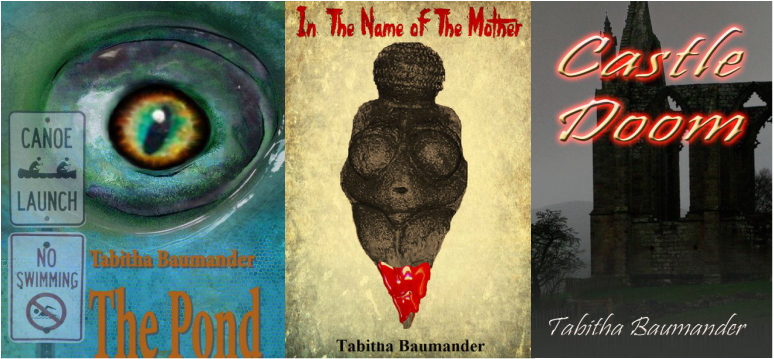
Check out these other great releases from Tabitha Baumander!

0 Comments

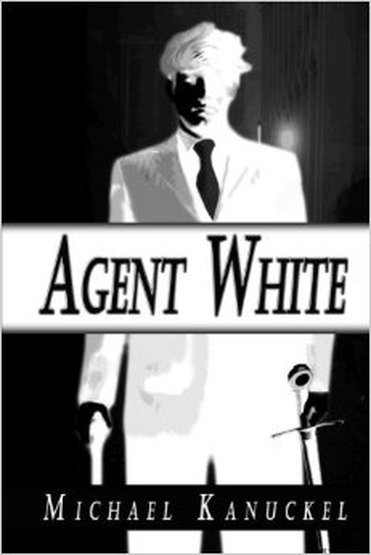
 Interview with Michael Kanuckel Author of Agent White

4/3/2014

0 Comments

 
Picture


Author Bio: 
Michael Kanuckel lives in a small rural town in the middle of Ohio with his two sons. He has been writing since he was in kindergarten, and always knew that he wanted to be an author. He has published short stories in various science fiction and fantasy magazines. He's the author of Winter's Heart, Small Matters, Grunge Childe, Agent White, Quatro and the upcoming  Trollbreaker.


Links:

Amazon: http://www.amazon.com/Michael-Kanuckel/e/B00F1PTRSA

Facebook: https://www.facebook.com/michaelkanuckelauthor

Twitter: https://twitter.com/MichaelKanuckel

Goodreads: https://www.goodreads.com/author/show/7264569.Michael_Kanuckel


1) Most of your books are set in a classic fantasy world, was it tough getting into the noir tone of Agent White? 


   Not really. I’ve always loved the old pulp fiction detective stuff, like Mickey Spillane and his ilk, and there was a real revival of that when I was a teen, with Sin City and other graphic fiction. I just moved that into my world.

2) Ezra is a strong noir character facing some unusual truths about his world. What do you like about him and his story?   


 What I like the most about Ezra is that he’s a no-nonsense kind of guy. He says what he means and does what he says. Even when faced with the fantastic, he never really loses his head. He’s goes into it with his same old attitude: how do I fix what’s wrong here?

3) Are there any scenes that you admire from the book? 


  I was really proud of the sequence that shows Ezra getting his first glimpse at the world behind his world. I also really liked his scenes with “Stillfield” Liam Connelly, who is a pool hustler, and the old man Owen, who draws him into this business in the first place. And there’s a character named Denthel Halfhill who I really enjoy. Really, I had a lot of fun with the whole thing.

4) Like Winter’s Heart Agent White is populated with great characters, do they come to you fully realized or do you feel that you’ve crafted them? Who’s your favorite? 


  Characters develop as the story develops. At first they just are characters- templates that you moved around on a soundstage. But then they begin to take on flesh, and a history, and characteristics that make them who they are. Then they aren’t characters- they’re people. I think my favorite character in Agent White (besides Ezra Beckitt) would have to be Boggle the gnome. He was just a lot of fun.

5) Your books are set in the same world but in differing ages, what age is Agent White set in? 


 Agent White is set in the Third Age, which is basically like our own near future. Vondellius is a place very much like our own country- the flavors of everything are just a little different, just enough that if you were there you would feel a bit strange.

6) Do things always play out the way you expect with your books or are there some big surprises as you go along?


  No, things never go the way I think they will- especially with this book. I had no real idea how I was going to end it until I got there myself.


0 Comments

March 27th, 2014

3/27/2014

0 Comments

 
Picture
AUTHOR BIO:
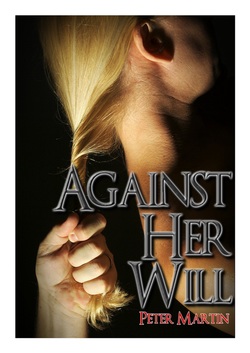
Born and bred in the West Midlands, Martin writes under the pen name of Peter Martin. Against Her Will is his debut novel, and is the story of one young woman's fight to lead a normal life after a horrific rape.
Martin's interests lie mainly in crime, suspense and thrillers. His favorite authors are diverse, including Robert Goddard, R J Ellory, Kate Mosse,Dean Koontz, Stephen King, Diane Chamberlain, Harper Lee,Wilbur Smith.
For more info martinperks.weebly.com


LINKS:
WEBSITE: hpps://martinperks.weebly.com
AMAZON LINK : http://bookShow.me/B00D50BFGK
FACEBOOK: hpps://facebook.com mart.perks
TWITTER: https://twitter.com/pmartinauthor
GOOD READS : https://www.goodreads.com/Martinperks


1) What inspired you to write Against Her Will? 

I've always felt strongly about how rape affects women, and how few of these women ever report these crimes to the police. Of those reported, many never come to trial and if they do conviction rates are low. Therefore I wanted to write a book from the victim's perspective, to give an idea what she has to go through, and show how it can destroy lives.
 
2) Is it challenging to promote a book with tough subject matter?


Yes, it can be challenging, but I believe in my characters and the subject matter. It has been difficult to promote, but I feel if people read the book, they will see I have written the book in a sensitive and compassionate way that highlights what a woman has to go through and how it can affect and blight their lives forever.

 
3) Do you feel Donna is a character who reacts realistically to her plight?

Donna had problems before she was attacked. She found it difficult to deal with the way she looks, having been pushed into the spotlight from an early age, against her wishes. Having overcome this in later life, the rape became a catalyst that brought all her other problems back to the fore again.
 

4)  Do you feel that books which tackle this issue in the way you have will bring light to women facing the same struggles after an attack?

I hope so. More women need to be strong to bring these men to justice. They must be made to realise these attacks will not be tolerated and only way to do that is for more women to come forward. I feel the sentences should be longer to ensure for certain they will be deterred from committing these acts. At present these people will only spend a short amount of time in jail, in comparison with the victim, who may not ever fully recover from what has happened to her.
 
5) Do you feel that women who deal with issues related to assault both sexual and/or physical get enough care and understanding after such traumatic events?

No, I don’t. Whilst I agree that the police in the main do deal with these crimes in a sympathetic way, what victims have to go through at trials, can be as difficult as the crime itself. There is always the feeling that the victim asked for it, by the way she dresses or acts.

6) Do you think you'll keep writing suspense novels of this type or will you tackle other subjects as you continue writing? 

I will continue to write novels like this if I feel strongly about a subject as in this novel. My next novel is about a young boy who runs away from home and goes missing, and how it affects his family.


0 Comments

    Amanda M Lyons

    Ms. Lyons is an author of fantasy, horror, and an avid reader of all genres.

    Archives

    June 2024
    December 2023
    October 2023
    July 2023
    July 2021
    June 2021
    April 2021
    September 2020
    June 2020
    April 2020
    November 2019
    July 2019
    June 2019
    February 2019
    December 2018
    July 2018
    May 2018
    April 2018
    January 2018
    October 2017
    August 2017
    June 2017
    August 2016
    February 2016
    January 2016
    December 2015
    November 2015
    October 2015
    September 2015
    August 2015
    July 2015
    May 2015
    April 2015
    March 2015
    February 2015
    January 2015
    December 2014
    November 2014
    September 2014
    August 2014
    July 2014
    June 2014
    May 2014
    April 2014
    March 2014
    February 2014
    January 2014
    December 2013
    November 2013
    September 2013
    August 2013
    June 2013
    May 2013
    April 2013

    Categories

    All
    #6
    70s
    Action
    Adventure
    Agent White
    Aghori Shaivite
    Amanda M. Lyons
    American Indian
    Anxiety
    Apocalyptic
    Apocrypha
    A Strange And Savage Garden
    Author Interview
    Authors
    Beauty Standards
    Bizarro
    Body Issues
    Brimstone Turnpike
    Brutal Criminal Fiction
    Cemetery Dance
    Characters That Stick
    Chenoa Egawa
    Children's Books
    Christina Engela
    Collectors Edition
    Cool Green Waters
    Cover Art
    Criminal Profiling
    Dairy Of The Dead
    Daniel Durrant
    Dark Fantasy
    Dark Tales
    David Mcglumphy
    DC's Dead
    Deaf Characters
    Death Metal
    Depression Era
    Detective Fiction
    Digital Artist
    Domestic Violence
    Dragons
    Durrant
    Dusty Lynn Holloway
    Editing
    Edward P Cardillo
    Essel Pratt
    Extreme Metal
    Eyes Like Blue Fire
    Fantasy
    Fat Isn't A Crime
    Fat Shaming
    Feral Hearts
    Final Reverie
    Genre Benders
    Germ Warfare
    Ghosts
    Giveaway
    Good Messages For Kids
    Gothic
    Halloween 2014
    Horror
    Immolation
    Inner Strength
    Interview
    Jea
    J Ellington Ashton
    J Ellington Ashton Press
    Jim Goforth
    Kealan Patrick Burke
    Keith Egawa
    Kindle Finds
    Lovecraftian
    Love Like Blood
    Lummi
    Lycanthropes
    Lycanthroship
    Mark Woods
    Mental And Emotional Trauma
    Metal-horror
    Michael Fisher
    Michael-kanuckel
    Midnight Remains
    Military
    Mornign-song
    Mothers
    Murders
    Mystery
    Native American
    Nephilim
    Noir
    North Korea
    Novella
    Obesity
    October 2014
    Of Blood And Water
    Of Guilt And Innocence
    Of Lions And Lambs
    Of Lost And Found
    Of Truth And Lies
    Ohio Authors
    Other Dangers
    Owning Your Life
    Panic Attacks
    Paperback
    Peter-martin
    Plague
    Plebs
    Pnr
    Political
    Post Apocalyptic
    Post-apocalyptic
    Preta Pathogen
    Prophetic-dreams
    Publishing
    Pyrokenesis
    Rape
    Rejected
    Richard-laymon
    Right To A Life
    Romantic-fantasy
    Romantic Vampires
    Rose And Steel
    Samantha Gregory
    Samhain Publishing Ltd
    Samuel Reese
    Self Abuse
    Self Promotion
    Serial Killers
    Series
    Shades Of Midnight
    Sharon L. Higa
    Short Collection
    Silent-heart
    Skinwalker
    S'Klallam
    Slasher
    Snakes
    Social Limitations
    Submissions
    Surreal
    Susan-simone
    Suspense
    Tabitha Baumander
    Tani's Search For The Heart
    Thriller
    Time Of Tides
    Tim Waggoner
    Under-a-twisted-moon
    Unique Voices In Fiction
    Urban-fantasy
    Vampire
    Vampires
    Victimization
    Virgil McClendon
    Warriors
    Water Like Crimson Sorrow
    Wendigo
    Wendy Won't Go
    Wendy Wont Gobb9e38f826
    Werewolves
    William Bove
    Wolf Boy
    Writing
    WWG
    Young Adult
    Zombies

    RSS Feed

Powered by Create your own unique website with customizable templates.